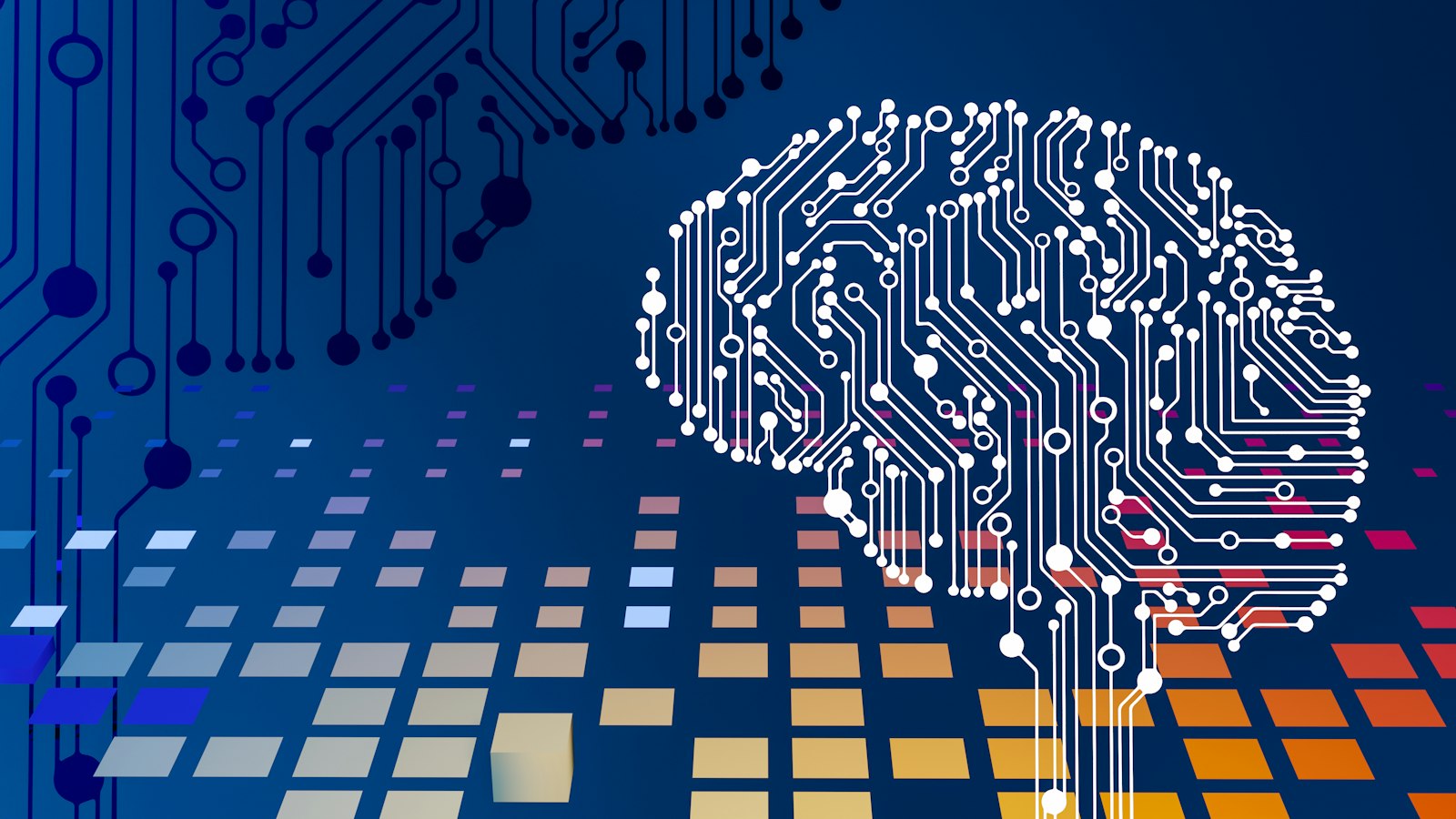
Pattern Machines, Not Magic
AI is not magic. It is math. Using massive data plus optimization algorithms to find patterns — then using those patterns to predict. What feels like "thinking" is billions of matrix multiplications per second.
The key insight: instead of coding rules manually, we let machines find the rules themselves from examples. Show a model ten million cat images — it learns what a cat is better than any programmer could describe.
🔬
Personal note: When I understood that AI doesn't "know" anything — it just found statistical patterns — it was both disappointing AND more interesting. It raises the real question: is human cognition fundamentally different, or are we also just very advanced biological pattern matchers?
02How Neural Networks Learn
🧠Deep neural networks — layers of nodes where each layer learns increasingly complex representations. Early layers: edges. Middle: shapes. Deep: faces, objects, meaning.
Each layer takes input, multiplies by weights, adds bias, runs through activation function. Learning = adjusting weights to minimize prediction error. Repeated millions of times until the model gets good.
// Forward pass
output = activation( (input × weights) + bias )
// Loss — how wrong was the prediction
loss = (predicted − actual)²
// Update weights using gradient descent
weight = weight − (learning_rate × ∂loss/∂weight)
⚡
ConceptNEURONS & LAYERS
Each neuron: weighted sum + activation. Layers stack increasingly abstract understanding. What feels like "seeing" is just hierarchical feature detection.
📉
AlgorithmGRADIENT DESCENT
The learning engine. Finds which direction to adjust weights to reduce error. Like rolling a ball downhill to find the lowest point in a vast error landscape.
↩️
AlgorithmBACKPROPAGATION
Figures out exactly how much each weight contributed to the error — working backwards from output. Chain rule of calculus, applied millions of times.
⚠️
ProblemOVERFITTING
When a model memorizes training data instead of learning general patterns. Scores perfectly on known data, fails completely on anything new.
03Major AI Architectures — Timeline
CNNs — Convolutional Neural Networks
The image recognition revolution
Sliding filters detect spatial patterns. How your phone's face unlock, photo tagging, and medical imaging AI works. Still backbone of all computer vision.
RNNs / LSTMs — Recurrent Networks
Sequential memory
Has "memory" of previous inputs. For text and time series. How early autocomplete and speech recognition worked before transformers took over.
Transformers (2017)
"Attention Is All You Need" — changed everything
GPT, Claude, Gemini — all transformers. Attention mechanism: every token attends to every other token simultaneously. Massively parallelizable. Scales to trillions of parameters.
Diffusion Models (2020+)
Learning to reverse chaos
How Stable Diffusion and DALL-E generate images. Trained to reverse a noising process — starts from pure random pixels and gradually resolves into coherent images guided by text.
04Robotics — Intelligence Gets a Body
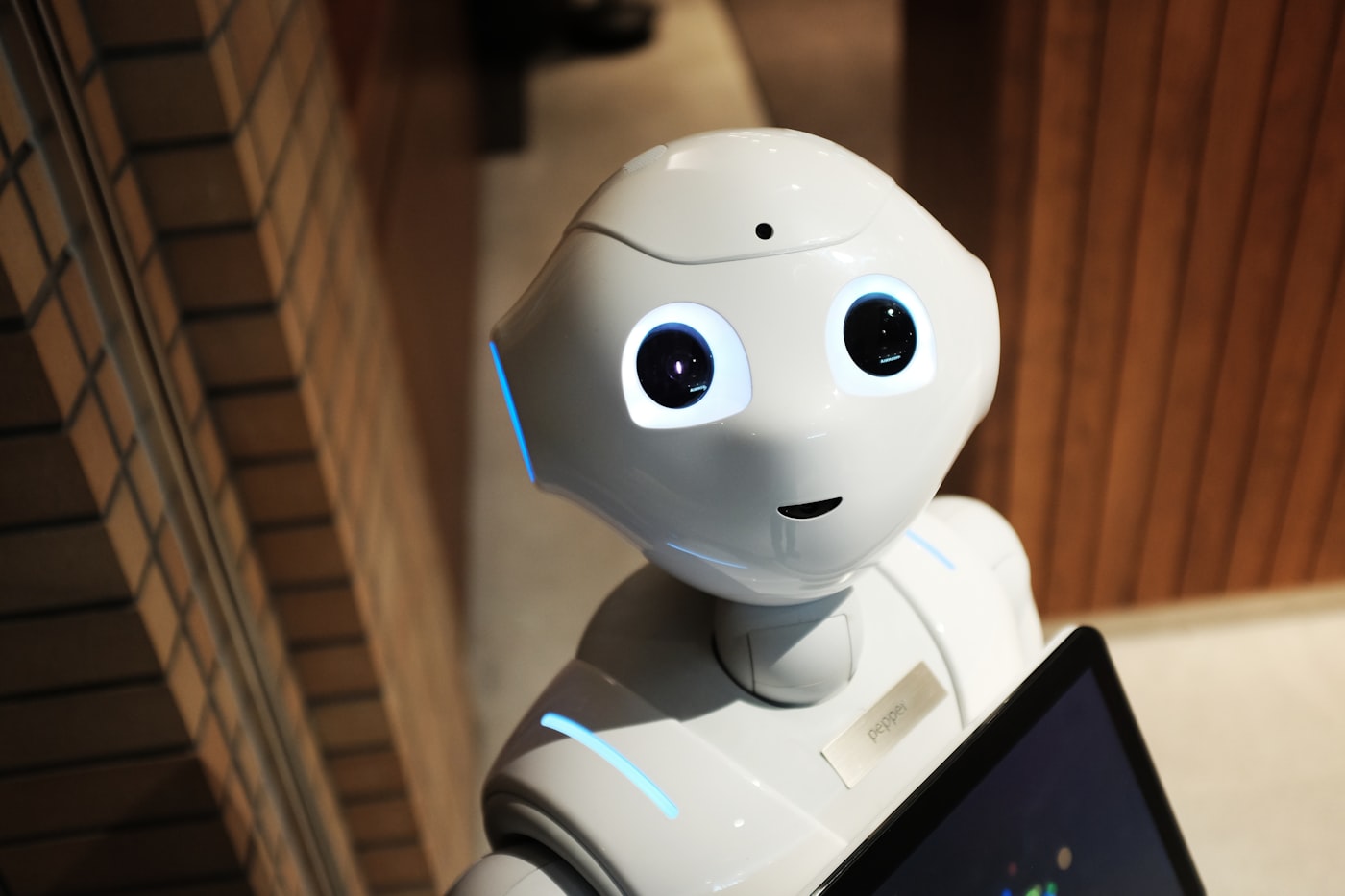
🤖Robots use a continuous sense-plan-act loop. The hard problem isn't intelligence — it's the interface between perfect software and a chaotic, unpredictable physical world.

HardwareSENSORS
Cameras, ultrasonic HC-SR04 (distance), MPU-6050 IMU (tilt/orientation), LIDAR (3D map). Each gives the robot one slice of environmental understanding.
→ HC-SR04 ~$2 · Used in logo robot build
HardwareACTUATORS
DC motors (speed/drive), servo motors (precise angle for arms), stepper motors (exact position). Different tradeoffs of speed, torque, and precision.
→ SG90 Servo ~$3 · Perfect for arm joints

BrainRASPBERRY PI
Single-board computer running Python. Controls GPIO pins, servos, sensors, OLED display, camera. The brain of the logo robot. Pi Zero 2W is perfect size and cost.
→ Pi Zero 2W ~$15 · Main controller
🎮
SoftwareREINFORCEMENT LEARNING
AI learns by trial, reward, punishment. How Boston Dynamics robots learned to walk — millions of simulated attempts until optimal behavior emerges through pure exploration.
→ Future study: OpenAI Gym
⚡
The Build Plan — Logo Robot IRL: Pi Zero 2W as the brain · SG90 servos for arms · HC-SR04 ultrasonic sensors as "eyes" · SSD1306 OLED for the chest screen · L298N motor driver for wheel movement. Estimated total: ~$80–120. Every Python and electronics skill I'm learning gets me closer to this build.
?
If a neural network is pure matrix math — at what point, if ever, does it cross from computation into something like understanding? Is "understanding" just a word we invented that means "very complex pattern matching"?
?
Current AI requires enormous data. Human babies learn object permanence and gravity from a fraction of that. What is the architecture of biological learning that makes it so wildly sample-efficient?
?
Can a robot ever have genuine situational awareness — a real internal model of itself — or will it always be a sophisticated lookup table that approximates awareness?
📺
3Blue1Brown — Neural Networks
YouTube // Visual math, essential
📺
Andrej Karpathy — makemore
YouTube // Building LLM from scratch
📚
fast.ai Practical Deep Learning
Free Course // Top-down approach
📺
freeCodeCamp ML Course
YouTube // Currently studying
📄
Attention Is All You Need (2017)
Paper // Transformer architecture origin
🔧
Raspberry Pi Docs + Projects
Docs // Robot build reference